Your Skin Is Not Broken: The Truth About Breakouts, Sensitivity, and Letting Go of the 'Perfect Complexion' Myth
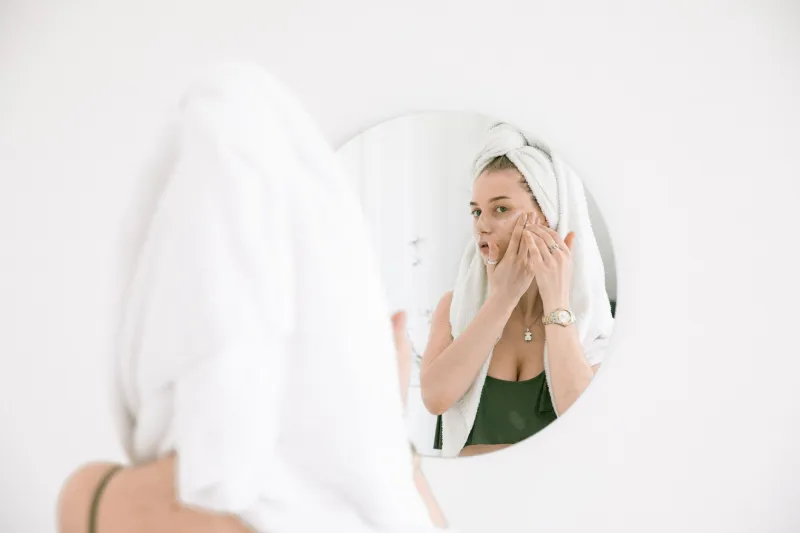
Here's the thing nobody puts on their skincare brand's Instagram: your skin was never supposed to be glass. That poreless, filter-smooth, perpetually dewy complexion you've been chasing since you first watched a YouTube tutorial in middle school? It's a fiction. And the anxiety spiral that kicks in every time a pimple shows up uninvited, or your cheeks flush red after trying a new serum, or your forehead decides to get bumpy for no apparent reason—that spiral is costing you more than any breakout ever could.
Let's talk about what's actually happening when your skin "misbehaves." Because nine times out of ten, it's not a crisis. It's communication.
The Panic-Treat Cycle Is Real, and It's Wrecking Your Skin
You wake up with a breakout. You immediately reach for the strongest spot treatment in your cabinet, layer on a clay mask, switch to a harsher cleanser, and Google "how to get rid of acne overnight" for the fourteenth time this year. Sound familiar?
This is the panic-treat cycle, and it's one of the most common ways people inadvertently make their skin worse. The logic feels sound—something is wrong, so you go hard on fixing it. But your skin doesn't respond well to being punished. When you strip it, over-exfoliate it, or bombard it with active ingredients back to back, you're not solving the problem. You're adding a new one.
Over-treated skin becomes reactive skin. Reactive skin becomes sensitive skin. And suddenly you're dealing with a whole new set of issues that have nothing to do with the original breakout and everything to do with how aggressively you responded to it.
The fix? Slow down. Seriously. One pimple is not a five-alarm emergency. It doesn't need to be nuked.
Common Trigger Myths That Need to Die
Let's bust a few of the biggest myths that keep people locked in the panic-treat cycle.
Myth #1: If you're breaking out, your skincare routine isn't working. Nope. Breakouts happen for dozens of reasons—hormones, stress, diet, weather changes, a new pillowcase fabric, a week of bad sleep, or just the fact that your body is doing body things. A single breakout doesn't indict your entire routine. Give it context before you blow the whole thing up and start over.
Myth #2: Purging means your product is working. Sometimes, yes. But not always. Actual skin purging—where a new active ingredient accelerates cell turnover and pushes congestion to the surface—typically happens in the first two to six weeks of using a retinoid or exfoliating acid, and it usually clears up on its own. If you're breaking out in areas where you don't normally get pimples, or the reaction is lasting longer than six weeks, that's not purging. That's irritation. Those are different things, and treating them the same way is a problem.
Myth #3: Sensitive skin means weak skin. This one is genuinely damaging. Sensitive skin isn't a flaw in your genetic code—it's often a sign that your barrier has been compromised, either by environmental stressors, over-exfoliation, or harsh products. It's also sometimes just your skin type, and that's completely valid. Sensitive skin isn't broken. It just requires a different kind of attention.
Myth #4: Clear skin equals healthy skin. This is probably the biggest lie the beauty industry has ever sold. Clear skin can be dehydrated, stripped, and miserable. Skin that occasionally breaks out can be well-nourished, resilient, and thriving. Texture, redness, and breakouts are not moral failings. They're data points.
What Your Skin Is Actually Trying to Tell You
When your skin reacts—whether that's a cluster of breakouts along your jawline, a sudden patch of dryness on your cheeks, or redness after using a product you've used a hundred times before—it's not being dramatic. It's responding to something.
Jawline and chin breakouts are often hormonal, especially if they follow a monthly pattern. Forehead breakouts can be linked to stress or hair products. Cheek breakouts sometimes point to environmental irritants or friction (yes, your phone screen counts). Sudden sensitivity to products you've used forever might mean your barrier is compromised and needs a reset, not a new serum.
Learning to read these signals instead of immediately trying to silence them is one of the most powerful shifts you can make in your skincare practice. Your skin isn't rebelling against you. It's rebelling against conditions that aren't working for it anymore—and honestly, that's kind of iconic.
The 'Flawed Skin Era' Is Not a Consolation Prize
There's a growing movement, especially among younger beauty consumers, to stop treating skin texture and breakouts as problems to be eradicated and start treating them as normal features of a living, breathing human face. And it's not just a vibe—there's real skin health logic behind it.
When you stop chasing perfection, you stop over-treating. When you stop over-treating, your barrier gets a chance to actually repair itself. When your barrier repairs itself, your skin becomes more resilient, less reactive, and—here's the irony—closer to that healthy, balanced complexion you were trying to force in the first place.
Embracing a flawed skin era doesn't mean giving up on skincare. It means building a routine based on what your skin actually needs instead of what the algorithm told you to buy. It means choosing gentle over aggressive, consistent over complicated, and honest over aspirational.
It means washing your face, moisturizing it, protecting it from the sun, and then leaving it the hell alone more often than not.
How to Actually Support Your Skin Without Losing Your Mind
If you want to build a routine that works with your skin instead of against it, here's where to start:
Strip it back during flare-ups. When your skin is reacting, less is genuinely more. Stick to a gentle cleanser, a basic moisturizer, and SPF. That's it. Give your barrier a chance to recover before you reintroduce anything active.
Introduce new products one at a time. If you add three new things at once and your skin freaks out, you have no idea which one is the culprit. One product, two weeks, then assess.
Stop skipping moisturizer when you break out. Dehydrated skin produces more oil to compensate. More oil can mean more breakouts. Moisturizer is not the enemy—it's often the solution.
Track your breakouts. Not obsessively, but enough to notice patterns. Are they hormonal? Stress-related? Tied to a specific product or habit? Patterns give you actual information. Panic gives you nothing useful.
Talk to a dermatologist if something feels persistent or painful. There's no award for suffering through cystic acne alone. Skin that genuinely needs clinical support deserves to get it.
The Bottom Line
Your skin is not a project to be completed. It's a living organ doing its best in a world full of stress, pollution, hormonal shifts, and an overwhelming number of products promising to fix problems it doesn't actually have.
Breakouts happen. Sensitivity happens. Redness, texture, and uneven tone happen. None of that makes you someone who has failed at skincare—it makes you someone with skin.
The most radical thing you can do for your complexion right now might not be adding anything new to your routine. It might be trusting your skin a little more, panicking a little less, and letting go of a standard of "perfect" that was never real to begin with.
Bold beauty at Batme has always been about showing up as you actually are. Your skin—reactive, textured, occasionally chaotic, and completely yours—fits that description perfectly.