Pores, Scars, and All: Why Real Skin Texture Is the New Power Move
For years, the beauty ideal sold to us was essentially a blank canvas. Smooth, pore-free, lit from within but never too human. Foundations promised to erase everything. Filters did the rest. And somewhere along the way, a lot of us started treating our actual faces—the ones with texture and history and realness baked in—like problems to be solved.
That narrative is cracking. And the cracks? They're the whole point.
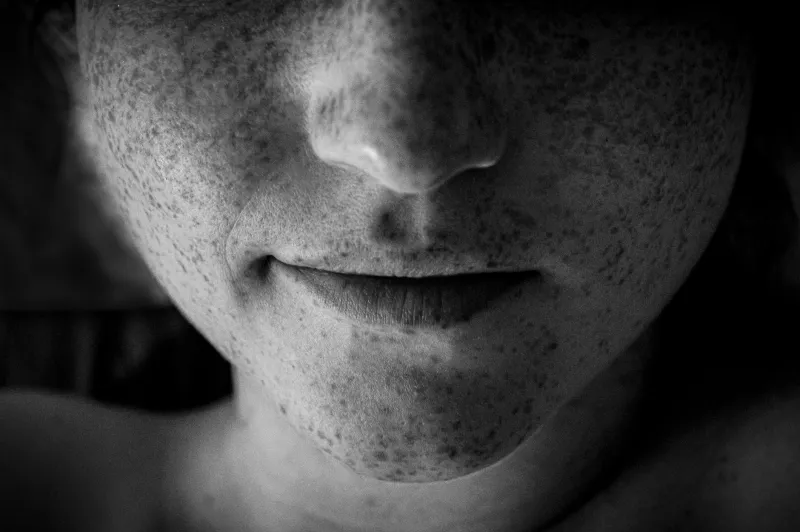
Right now, across social media, editorial spreads, and everyday selfies, something genuinely different is happening. People are showing up with their acne scars visible, their pores unblurred, their hyperpigmentation unretouched—and not apologizing for a single pixel of it. This isn't a trend born from laziness or a lack of access to coverage products. It's a deliberate, defiant choice. And it's hitting different.
The Filter Fatigue Is Real
Let's call it what it is: we're burned out on perfection. After years of scrolling past faces that looked like they were rendered by a video game engine, audiences started getting skeptical—and then exhausted. The uncanny valley of beauty content, where everyone's skin looked identical and impossibly smooth, stopped feeling aspirational and started feeling alienating.
Research backs this up. Studies on social media and body image have consistently shown that heavily filtered content correlates with lower self-esteem, particularly among younger women. But what's newer—and genuinely exciting—is the pushback. Gen Z and millennial creators alike have started calling out the filter culture explicitly, posting "no filter" content not as a humble brag but as a statement. A refusal.
When someone posts a close-up with their pores front and center and captions it with zero apology, that's not vulnerability. That's power.
Texture Has a Story
Here's what the airbrushed ideal always got wrong: skin texture isn't a flaw. It's a record. Those acne scars? They're from a chapter you lived through. That hyperpigmentation along your jawline? Sun, hormones, time—all of it written on your face in the most human way possible. The fine lines starting to form? Evidence that you've been showing up, laughing, crying, existing in full.
The shift happening right now is less about skincare minimalism as an aesthetic and more about a fundamental reframe of what skin is for. It's not a backdrop for makeup. It's not a surface to be perfected. It's skin. It breathes and changes and reacts and lives.
Creators like Remi Bader, Nara Smith (before the algorithm got to her), and countless micro-influencers with real followings have built loyal communities precisely because their skin looks like skin. Not a product. Not a filter. A face.
The Skincare Shift Making This Possible
None of this is happening in a vacuum. The skincare industry has quietly undergone a massive philosophical pivot over the past five years—one that's made the "real skin" movement not just emotionally resonant but practically achievable.
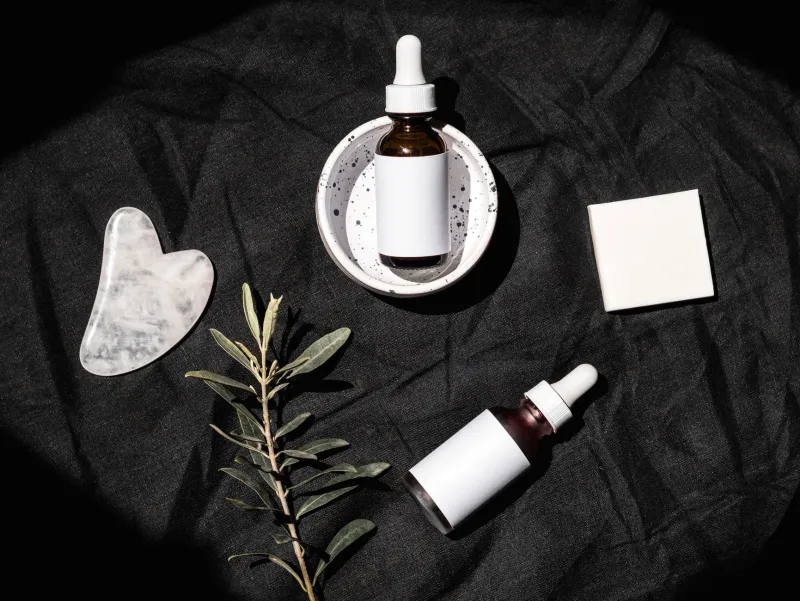
The obsession with stripping and resurfacing has given way to something more nuanced: barrier repair, microbiome health, skin-identical ingredients. Products built around ceramides, niacinamide, and peptides aren't promising to erase your texture. They're promising to make your skin healthy—which looks different on everyone and doesn't come with a smoothness guarantee.
This matters because healthy skin and textured skin are not opposites. A strong skin barrier can coexist with visible pores. Hydrated, glowing skin can also have acne scars. The skincare conversation has finally—finally—started to decouple "good skin" from "smooth skin," and that decoupling is giving people permission to show up as they actually are.
At Batme, we're here for all of it. Bold beauty doesn't mean perfect beauty. It means intentional beauty—knowing what you're working with and owning every inch of it.
Ditching Heavy Coverage Without Ditching Makeup
Let's be clear: this isn't an anti-makeup manifesto. The rise of real skin texture doesn't mean foundation is canceled or that you're somehow more evolved if you go bare-faced. This is about choice, not virtue.
What's changing is the why behind coverage choices. More people are reaching for skin tints, tinted moisturizers, and sheer serums not because they can't afford full coverage, but because they actively want their skin to show through. They want the freckles visible. They want the texture present. They want the foundation to enhance rather than replace.
The makeup looks that are resonating most right now lean into this. Glossy lids, bold lips, defined brows—strong features against skin that looks real. The contrast is striking precisely because the skin isn't trying to compete. It's just there, being skin.
If you're curious about making this shift, start simple. Swap your full-coverage foundation for a skin tint or a medium-coverage serum foundation on your next low-stakes day. See how it feels to let your skin breathe through the product. Notice what you actually look like—not the version of yourself that's been filtered and filled in, but the actual landscape of your face. Give yourself a minute with it.
The Cultural Moment Behind the Movement
It would be too easy to frame this purely as a beauty industry evolution. What's really happening is bigger: we're in the middle of a collective renegotiation of what authenticity looks like—and beauty is one of the clearest arenas where that's playing out.
The pandemic did something strange and lasting to how people relate to their own faces. Zoom calls forced prolonged, unavoidable self-observation. Masks made skincare the priority when makeup became optional. And somewhere in that extended, unfiltered face time, a lot of people started to actually see themselves—texture and all—and decide that what they saw was fine. More than fine.
That recalibration didn't disappear when the world reopened. It stuck. And now it's showing up in makeup choices, in skincare marketing, in the faces that get celebrated online versus the ones that get smoothed into oblivion.
The Bottom Line
Real skin is not a consolation prize for people who can't achieve perfection. It's the destination. The texture you've been trying to hide, blur, and fill in is the thing that makes your face yours—irreplicable, specific, alive.
The beauty industry spent decades telling you that your skin needed to be fixed before it was ready to be seen. That story is tired. The new one is more interesting: your skin, exactly as it is, is already the main character.
Show up in it. No apologies. No filter. Just you.