Shadow Play: The Case for Letting Your Undereyes Do the Talking
Somewhere along the way, the beauty industry decided that the skin beneath your eyes needed to be erased. Brightened. Corrected. Lifted into some kind of artificial daylight that makes you look like you slept nine hours and drank a gallon of water before sunrise. And for a while, we all played along — stacking concealer on concealer, color-correcting with peach and orange pigments, patting and baking and blending until every shadow was gone.
But here's the thing about shadows: they give your face dimension. They make you look like a person instead of a filtered image. And a growing number of makeup artists, beauty editors, and everyday people across the US are waking up to that fact — literally and figuratively.
The undereye darkness you've been fighting? It might just be your best feature.
Why We Started Hating Our Undereyes in the First Place
Let's be real about where this obsession with bright, smooth, flawless undereyes actually came from. HD cameras and high-resolution social media didn't just change how we take photos — they changed how we looked at our own faces. Suddenly, every natural texture and shadow became something to 'fix.' Beauty brands capitalized hard on that insecurity, flooding the market with concealers promising to make you look 'wide awake,' 'lifted,' and 'youthful.'
The message was subtle but relentless: your real face, rested or not, isn't enough.
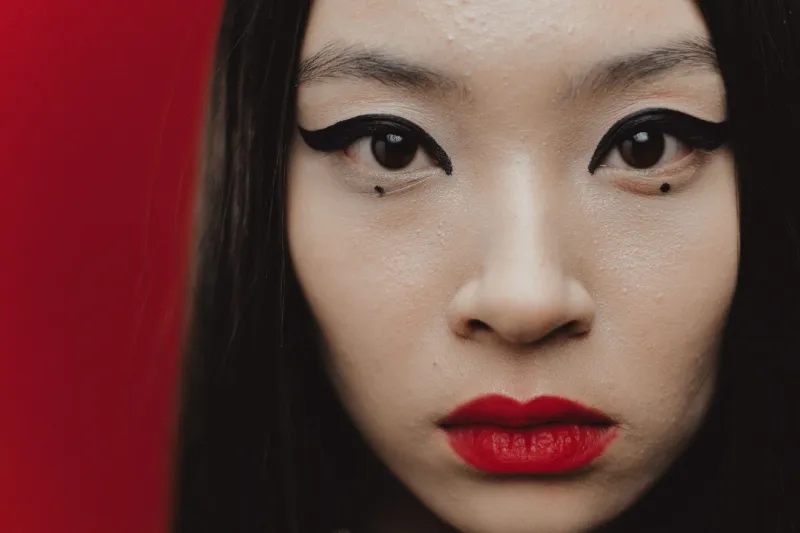
But zoom out a little and you'll notice something interesting. In editorial fashion photography, in film, in the faces of people who are considered genuinely, iconically beautiful — shadows exist. They're part of what makes a face compelling. A perfectly flat, uniformly bright canvas reads as artificial. Depth reads as real.
The Artists Who Are Ditching the Brightening Agenda
Makeup artists working at the intersection of fashion and beauty have been quietly — and not so quietly — pushing back on the concealer-everything approach for a few years now.
New York-based makeup artist Deja M., who works regularly with editorial clients and independent film productions, puts it plainly: "I stopped trying to erase undereyes on almost all my clients. When you do that, you lose the architecture of the face. The hollows and shadows are what make cheekbones look like cheekbones. They're what make eyes look deep and interesting."
LA-based artist Tomás V. agrees, and takes it further. "There's a whole generation of clients coming to me and specifically asking me not to cover their undereyes. They want to look like themselves — like someone who has a life, who stays up late, who feels things. That's not a flaw. That's character."
What these artists are doing instead is intentional: they're working with the natural shadow rather than against it, sometimes even enhancing it with sheer washes of cool-toned shadow or tinted balms that deepen the area without making it look like traditional eye makeup.
How to Actually Lean Into It
If you're ready to try this — and you should be — it's less about doing nothing and more about doing something different. Here's how to make undereye darkness feel intentional and editorial rather than just tired.
Skip the full-coverage concealer. If you're used to stacking product under your eyes, this is the hardest part. Try swapping your opaque formula for a sheer, skin-tinted balm that just hydrates and blurs without erasing. Batme's approach: look for formulas that describe themselves as 'skin-like' or 'blurring' rather than 'correcting' or 'brightening.'
Play up the rest of your eye. When the undereye area reads darker and more dimensional, your eye makeup becomes part of a whole composition. A smudged liner on the upper lash line, a bold brow, or a defined crease shadow all work with that depth rather than against it.
Try a cool-toned wash. Some artists are actually using a very sheer application of a grayish-lavender or dusty mauve shadow pressed lightly under the eye — not to create a raccoon effect, but to make the natural darkness look deliberate and polished. Think of it as contouring for the undereye zone.
Moisturize obsessively. This is the one non-negotiable. Undereye skin is thin and delicate. If you're going to let it show, you want it hydrated and smooth. A good eye cream or balm applied morning and night makes all the difference between 'editorial shadow' and 'dehydrated and flaky.'
Balance with skin elsewhere. If your undereyes are going natural and dimensional, you might want your complexion to look polished and intentional in other ways — a well-blended base on the rest of your face, a defined lip, or a clean brow can keep the whole look feeling chosen rather than accidental.
The Shade Question: What If Yours Is Really Dark?
Here's where it gets personal. Undereye darkness shows up differently across skin tones and for different reasons — genetics, melanin, thin skin, lifestyle, all of it. For people with deeper complexions, hyperpigmentation under the eyes can be significant. For others, it's purely structural shadowing from the orbital bone.
The good news: none of that means you have to cover it. But it does mean you get to make an informed choice about how much you want to work with versus enhance.
If you have deeper hyperpigmentation and you want to even the tone a little without eliminating the shadow entirely, a color-correcting product applied lightly — just enough to neutralize without brightening — can let you keep the dimension while softening the contrast. You're not erasing. You're editing.
And if you want to go full shadow? You absolutely can. The key is intention. When it looks like you chose it, it reads as a statement. When it looks like you forgot, it reads differently — and the difference is usually just a little definition elsewhere on the face.
The Real Glow-Up
The beauty industry has been selling 'glow-up' as a synonym for erasure for too long. Brighter. Smoother. More corrected. More lifted. But real glow — the kind that actually reads as confidence and presence — doesn't come from making your face look like it was processed in Lightroom. It comes from knowing what you look like and choosing to inhabit that fully.
Your undereyes are part of your face. The shadows there tell a story about your bone structure, your skin, your life. Covering them completely is one option. But so is letting them be exactly what they are — or even turning up the volume on them — and walking out the door like someone who made a deliberate, interesting choice.
That's the kind of glow-up we're here for.