Gloss Is Dead, Long Live the Dark Side: How Gen Z Is Blowing Up the 'Clean Girl' Beauty Myth
For a hot minute, the internet told us the most aspirational thing a woman could do with her face was look like she'd done almost nothing to it. Slicked-back hair. Glazed skin. A single coat of mascara, maybe. The 'clean girl' aesthetic swept through TikTok like a beauty gospel, promising that effortlessness was the ultimate flex.
Gen Z said: hard pass.
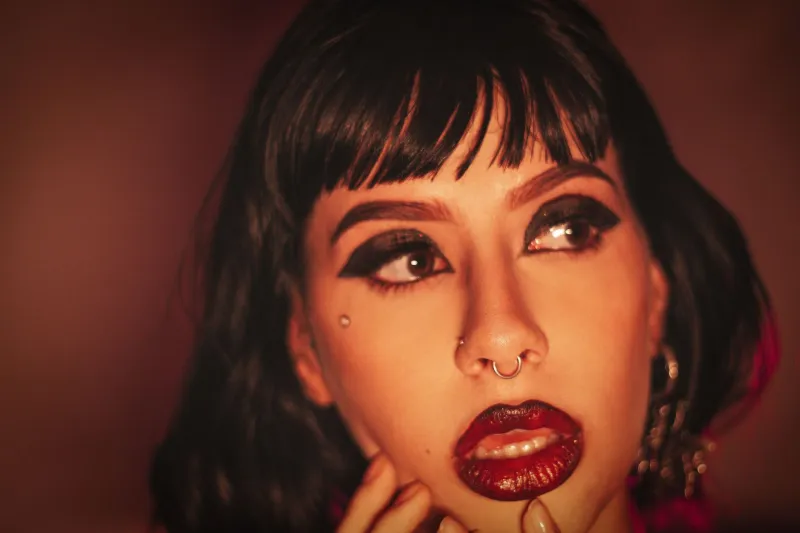
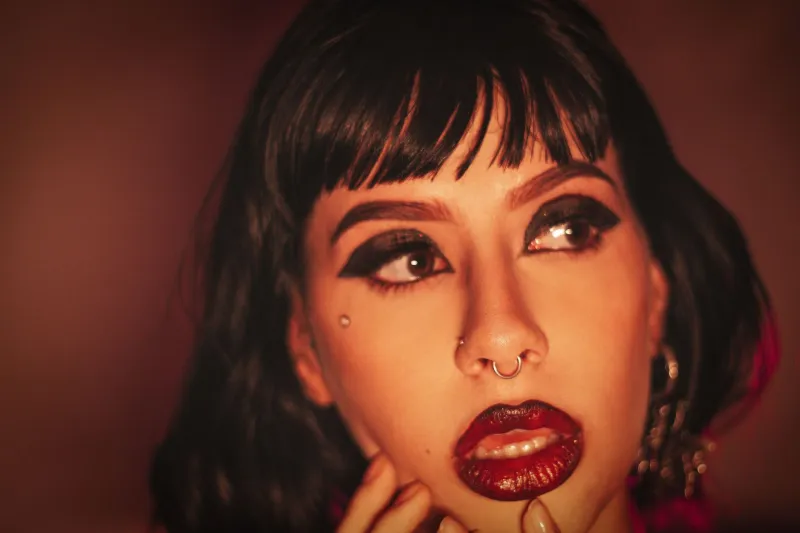
Not all of Gen Z, sure—but a loud, unapologetic, eyeliner-smudged contingent has been quietly (and not so quietly) torching that whole premise. They're reaching for the darkest shades in the palette, lining their waterlines into oblivion, and wearing deep plum lipstick to brunch. And honestly? It looks incredible.
But this shift isn't just about aesthetics. It's about what beauty means when you refuse to let anyone else define it.
The 'Clean Girl' Aesthetic Was Never Really About Cleanliness
Let's be real about what the 'clean girl' look actually required. That supposedly effortless glow? It demanded a 12-step skincare routine, a specific body type, naturally thick brows, and—let's say it—a certain proximity to conventional, Eurocentric beauty standards. The "no-makeup makeup" look was expensive, time-consuming, and deeply exclusionary, even as it marketed itself as the most natural thing in the world.
Gen Z clocked that contradiction fast. When TikTok's algorithm started surfacing creators who looked polished in their "natural" state, younger users started asking the obvious question: natural for whom? The backlash wasn't just aesthetic—it was political.
Enter the dark side.
TikTok's Role in the Rebellion
If the 'clean girl' aesthetic had TikTok as its launchpad, the dark makeup rebellion found its home there too—just in different corners. The #gothicbeauty and #darkmakeup tags have racked up billions of views, and creators are leaning hard into theatrical, high-contrast looks that would've been considered "too much" by 2019 standards.
We're talking heavy winged liner that extends into dramatic bat-like curves. Vampiric berry lips paired with pale, porcelain-finish skin. Blush applied so intensely it looks like a fever dream. Contour so sharp it could cut glass.
What's interesting is that these looks aren't necessarily pulling from traditional goth subculture—though that influence is absolutely there. They're something newer. More fluid. A mashup of Y2K nostalgia, anime aesthetics, dark fantasy, and pure "I felt like it" energy. The through-line isn't a specific subculture. It's the refusal to be palatable.
The Celebrity Push You Can't Ignore
Trends don't exist in a vacuum, and celebrity culture is still doing heavy lifting here. When Olivia Rodrigo leaned into her bruised, smudged-liner era, it resonated with millions of fans who'd been told their dramatic instincts were "too much." Billie Eilish built an entire brand identity around subverting beauty norms—and then flipped it entirely, proving that the point was never about one look but about owning your own narrative.
More recently, the red carpet has seen a surge of deep, moody palettes. Dark lips are back in a serious way. Smoky eyes have shed their "going-out" associations and become everyday wear for a generation that doesn't see why dramatic should be reserved for special occasions.
These moments matter because they give permission. When a celebrity you admire shows up looking darkly, boldly herself, it signals that there's space for that version of beauty in the mainstream—even as the look itself is rejecting the mainstream.
The Psychology of Bold as an Act of Resistance
Here's where it gets genuinely interesting. Psychologists who study self-expression and identity formation have long noted that appearance is one of the primary ways young people signal belonging—or deliberate non-belonging. Choosing a look that deviates from the dominant beauty norm isn't just an aesthetic decision. It's a declaration.
For Gen Z, who came of age during a period of intense social and political upheaval, beauty has become a kind of battleground for autonomy. In a world that increasingly monitors, filters, and algorithmically flattens individual expression, wearing a face full of dramatic, unconventional makeup is a small but meaningful act of resistance.
It says: I am not optimizing myself for your comfort.
That's the energy behind the dark makeup movement—and it's why it feels so different from trends that came before it. This isn't about following a new rulebook. It's about burning the rulebook entirely.
What This Means for the Beauty Industry
Brands are paying attention, and some are responding in genuinely exciting ways. Deeper shade ranges in lip products, more pigmented eyeshadow palettes designed for high-drama looks, and campaigns that actually celebrate bold, unconventional beauty are all on the rise. The market is catching up—slowly, but it's moving.
At Batme Cosmetics, this is exactly the energy we live for. Bold beauty with no apologies. Looks that make a statement because you decided they should, not because an algorithm rewarded them with engagement.
How to Tap Into the Dark Aesthetic Without Losing Yourself
Here's the thing about this trend: there are no rules, and that's the whole point. But if you want to start experimenting with darker, more dramatic looks, a few entry points work beautifully:
- Start with the eyes. A smudged, imperfect liner look is incredibly forgiving and immediately shifts the energy of any face. Try tightlining with a dark kohl pencil and smudging it slightly below the lash line.
- Go deep on lips. A berry, plum, or near-black lip with otherwise minimal makeup is striking without feeling overwhelming. Balance is optional—but contrast is everything.
- Embrace imperfection. The dark makeup aesthetic isn't about precision. It's about intention. A slightly smudged liner isn't a mistake—it's a choice.
- Layer your textures. Matte skin with a glossy lid. Dewy base with a matte lip. Playing with texture contrast adds depth and keeps the look from feeling flat.
Most importantly: wear what makes you feel like the most interesting version of yourself. That's the whole rebellion, summed up.
The Bottom Line
The 'clean girl' aesthetic isn't going anywhere entirely—but its grip on the beauty conversation is loosening, and Gen Z is doing the loosening. The shift toward darker, bolder, more theatrical looks is a cultural statement as much as a style choice. It's about reclaiming beauty as a form of self-expression rather than a performance of palatability.
And honestly? The dark side looks really, really good.