Hard Stop: Why Blending Out Your Makeup Is Keeping You Basic
Somewhere along the way, the beauty industry decided that the ultimate goal of any makeup look was to make it disappear into itself. Blend, blend, blend. Diffuse the edges. Soften the transition. Make it look like you woke up with cheekbones carved by angels and eyes that naturally smolder in three perfectly graduated shades of taupe.
And honestly? We're bored.
The deliberate harsh line — the visible color block, the eyeshadow that stops exactly where you told it to stop — isn't a mistake anymore. It's a choice. A loud, confident, fully-intentional choice. And if you've been trained to immediately reach for a blending brush the second you spot a crisp edge on your lid, this article is your intervention.
The Cult of the Seamless Blend (And Why It Needs to Die)
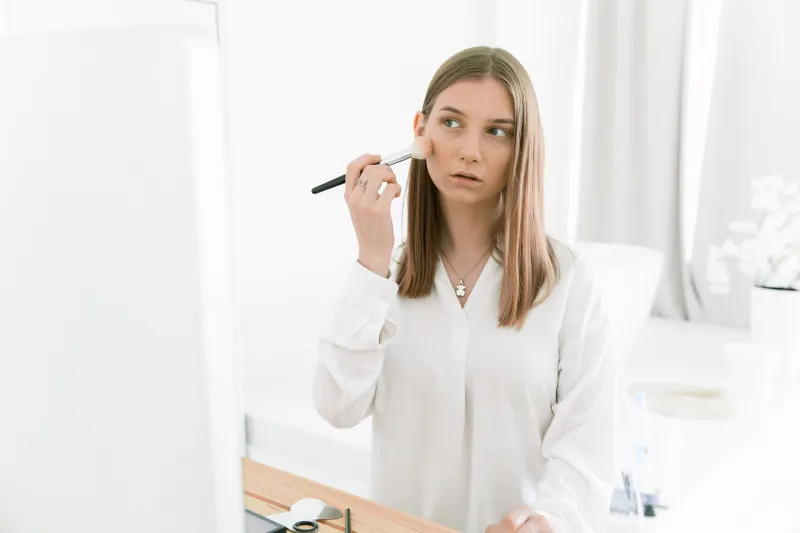
Blending as a beauty standard didn't come from nowhere. For decades, makeup tutorials — from YouTube's early days to TikTok's algorithmic explosion — have centered the idea that visible technique is a flaw. If you could see where one color ended and another began, you hadn't worked hard enough. The goal was always invisible effort, flawless execution, no seams showing.
But here's the thing: that standard was never really about artistry. It was about conformity. About producing a look that scanned as "correct" to as many people as possible. It's the beauty equivalent of corporate casual — inoffensive, palatable, forgettable.
The new wave of makeup artists and beauty creators pushing harsh-line aesthetics aren't rejecting skill. They're rejecting the idea that skill has to be invisible. A crisp, pigment-saturated block of color sitting right on the crease with zero diffusion? That takes precision. That takes confidence. And it looks nothing like everyone else.
What "Anti-Blend" Actually Means in Practice
Let's be clear: this isn't about being sloppy. Anti-blend is not an excuse to rush your routine or skip technique entirely. The difference between a messy look and an intentional harsh-line look is control — you have to know exactly where you're placing color and commit to it fully.
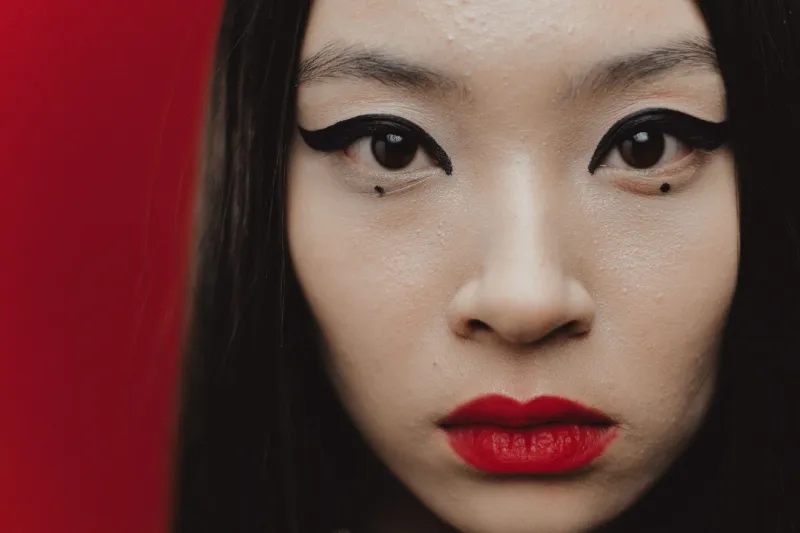
Think graphic liner that doesn't fade into a smoky haze at the edges. Think a block of deep burgundy shadow that sits on the lid in a hard rectangle, no gradient, no transition shade. Think blush applied in a deliberate stripe across the nose and cheeks with zero blending into the skin — just a visible flush of color sitting on top like a stamp.
The anti-blend aesthetic borrows from editorial makeup, graphic art, and the kind of looks you'd see backstage at a runway show that never quite made it to mainstream tutorials. It's been living in the margins of beauty culture for years, and it's finally breaking through.
How to Actually Pull This Off
Start With Your Eyes
The eyelid is the easiest place to experiment with harsh lines because the stakes feel lower — a "mistake" here reads as avant-garde faster than anywhere else on the face.
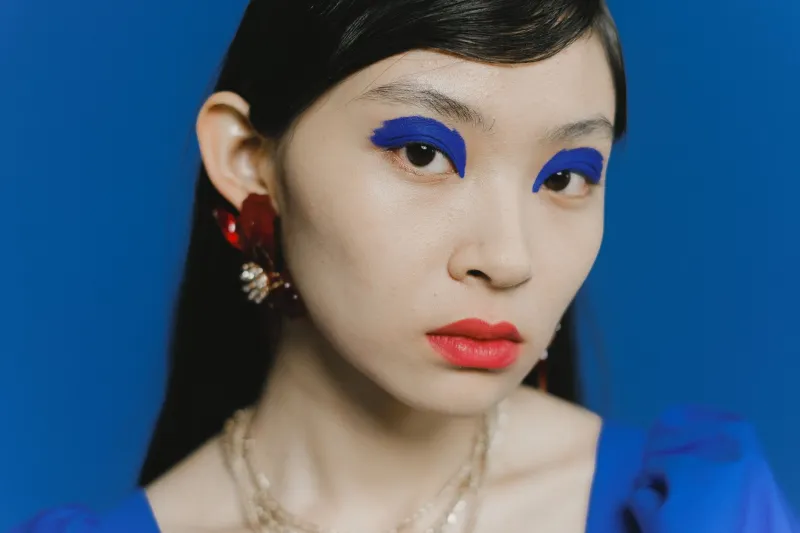
Pick two colors with serious contrast. We're talking a true pop — think cobalt blue and a stark nude, or a deep forest green against a pale champagne. Apply the darker shade directly to the lid with a flat brush, pressing it on rather than sweeping it. Stop at a hard line. Don't go back in with a fluffy brush to diffuse it. The line is the point.
For the transition area, either leave it bare (bold) or apply a completely different color that also has a defined edge. You're building a color-blocked lid, not a gradient. If your instinct is to grab your blending brush, put it down.
Commit to the Color Block Blush
Color-blocked blush is one of the fastest ways to shift your whole face into anti-blend territory. Instead of sweeping blush up toward the temples in a soft flush, apply it in a concentrated zone — a thick stripe across the apples of the cheeks, maybe cutting slightly over the nose bridge.
Use a flat, dense brush or even your fingers for this. The goal is a saturated patch of color with visible edges. Terracotta, cherry red, and deep rose all work incredibly well here. The look should read almost like a bruise or a stripe — graphic, deliberate, unapologetic.
Liner With No Smoke
Smoky liner has been the safety net for crisp lines that "went wrong" for years. You overdo the wing, you smudge it out and call it intentional. The anti-blend approach says: keep the crisp line. Let the edge be sharp. If it's slightly imperfect, that's texture, not failure.
Try a graphic liner look with a flat cut crease — a strong lid line that doesn't connect to a wing but instead ends abruptly, almost like a paint stroke. Pair it with nothing underneath the eye. The asymmetry and the starkness of the line will carry the entire look.
The Psychology of the Harsh Line
There's something worth sitting with here beyond the technical. Why does the seamless blend feel "safer"? Because it erases evidence of effort, of decision-making, of presence. A perfectly blended look says: I tried not to be seen trying.
A harsh line says: I was here. I made this. You can see exactly where I decided.
That's not a small thing. In a beauty culture still deeply tangled up in the idea that makeup should enhance but not announce itself, choosing visible technique is a kind of refusal. It refuses the idea that the best makeup is the makeup nobody notices. It insists on being noticed.
And for a lot of people — especially those who've spent years chasing the "natural" ideal and never quite feeling like they nailed it — that refusal feels like relief.
The Brands and Creators Leading the Charge
You don't have to look far to see this aesthetic gaining serious ground. Independent makeup artists on Instagram and TikTok have been posting color-blocked, graphic, deliberately unblended looks for the past couple of years, racking up millions of views from an audience clearly hungry for something that looks different.
High-pigment, single-pan shadows and ultra-saturated cream products are having a major moment precisely because they support this kind of work — you need serious color payoff for a harsh line to read correctly. Sheer, buildable formulas were designed for blending. The products landing on everyone's wishlist right now were designed for impact.
Your Permission Slip
If you've been blending because you actually love the result, keep blending. This isn't an anti-blending manifesto for its own sake. But if you've been blending because you were afraid of what a visible edge might say about you — afraid it would look "wrong" or "unfinished" or like you didn't know what you were doing — this is your permission to stop.
The harsh line is finished. It's intentional. It's yours.
And it looks nothing like everyone else's, which is exactly the point.